
Pricing Details
Weekly: $6.99 per week; includes 20 high-resolution renders, unlimited AI chats, unlimited suggested prompts, real furniture suggestions, mix and match from dozens of styles, and a commercial usage license. Monthly: $24.99 per month; includes 100 high-resolution renders, unlimited AI chats, unlimited suggested prompts, real furniture suggestions, mix and match from dozens of styles, and a commercial usage license. Disclaimer: Please note that pricing information may not be up to date. For the most accurate and current pricing details, refer to the official Paintit website.
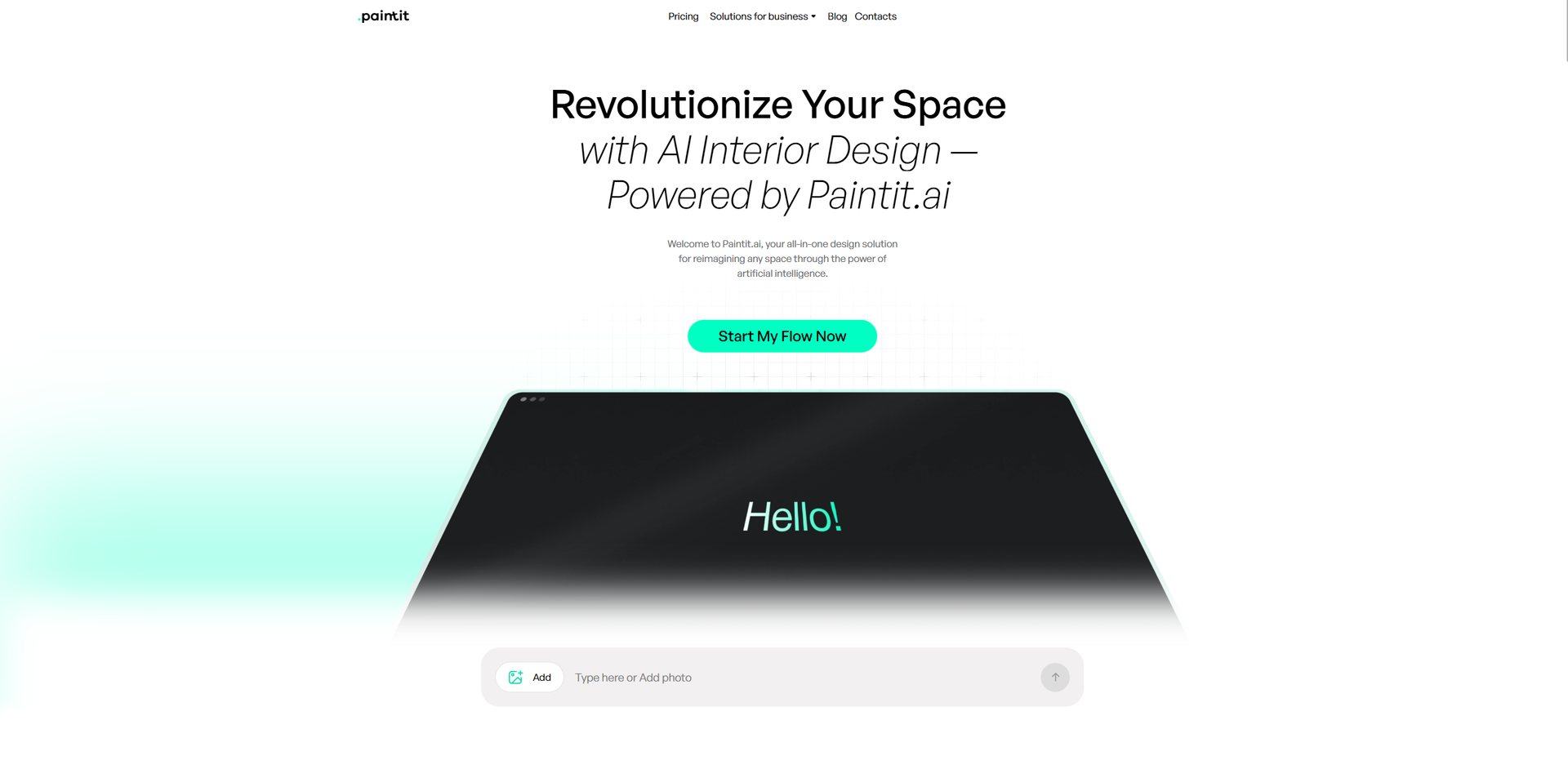
Product Visuals (1 images)
Strengths
- Fast Concept Exploration: Generates multiple high quality room options in minutes, which significantly shortens the ideation phase.
- User Friendly Flow: The “music playlist” style interface is approachable for beginners and helps reduce the fear of making wrong design choices.
- High Visual Fidelity: Photorealistic 3D scenes with attention to lighting and scale help users trust that the design will work in real life.
- Flexible Granularity: Handles both full room makeovers and targeted tasks such as repainting walls, changing flooring, or testing lighting.
- Business Ready: Commercial usage rights, virtual staging, and an embeddable widget make it useful for agencies, realtors, and retailers.
Limitations
- Design Nuance Still Needed: AI suggestions may require manual refinement, especially for very specific stylistic briefs or unusual spaces.
- Render Quotas: Weekly and monthly plans cap the number of high resolution renders, which power users may find limiting.
- Primarily Interior Focused: Exterior and landscape design are mentioned as future ambitions rather than fully developed capabilities today.
What You Get
Key Features
- AI Room Analysis: Interprets room dimensions, lighting, existing decor, and style preferences from photos, JPG, PNG, PDF, or DWG files to generate tailored designs.
- Style Tracks and Presets: Lets users browse curated styles such as modern, industrial, or Scandinavian, then instantly see how each direction would look in their own rooms.
- Real-Time Regeneration: Supports rapid tweaks to wall colors, furniture, decor, and layouts, with updated photorealistic renderings appearing in roughly one to two minutes.
- Furniture Placement and Recommendations: Suggests real furniture pieces that fit the layout and proportions, so users can “shop the look” instead of guessing what will fit.
- Virtual Staging for Empty Spaces: Fills unfurnished rooms with realistic 3D interiors, ideal for real estate listings and property marketing.
- Sketch to Render: Converts rough sketches and basic plans into polished 3D room scenes, useful for early concept work and client previews.
- Business Widget and Integrations: Offers an AI designer widget that retailers and other businesses can embed on their sites so visitors can configure rooms with products in context.
- AI Chat and Suggested Prompts: Includes conversational guidance and prompt suggestions, making it easier for non designers to describe what they want.
- ProsFast Concept Exploration: Generates multiple high quality room options in minutes, which significantly shortens the ideation phase.User Friendly Flow: The “music playlist” style interface is approachable for beginners and helps reduce the fear of making wrong design choices.High Visual Fidelity: Photorealistic 3D scenes with attention to lighting and scale help users trust that the design will work in real life.Flexible Granularity: Handles both full room makeovers and targeted tasks such as repainting walls, changing flooring, or testing lighting.Business Ready: Commercial usage rights, virtual staging, and an embeddable widget make it useful for agencies, realtors, and retailers.ConsDesign Nuance Still Needed: AI suggestions may require manual refinement, especially for very specific stylistic briefs or unusual spaces.Render Quotas: Weekly and monthly plans cap the number of high resolution renders, which power users may find limiting.Primarily Interior Focused: Exterior and landscape design are mentioned as future ambitions rather than fully developed capabilities today.
Best For
- Homeowners and Renters: Testing color schemes, furniture swaps, and layout changes before spending money on real items.
- Interior Designers and Decorators: Speeding up concept development, client presentations, and quick “what if” explorations.
- Real Estate Agents and Property Managers: Using virtual staging to present empty or outdated properties in a more appealing way.
- Retailers and E-commerce Brands: Embedding the widget so shoppers can visualize products in realistic interiors.
- Uncommon Use Cases: Adopted by design and architecture programs for teaching spatial thinking; used by content creators to generate on brand room scenes for social media backdrops and marketing visuals.
Similar Tools

Design tools · weekly digest
The AI Weekly — free in your inbox
New AI tools, pricing changes, expert picks, and hidden gems — curated by Mr. Spark every week. Join 5,000+ readers who stay ahead of the AI curve.