
Pricing Details
Subscription-Based Model: Available through a subscription model, tailored to the size and needs of the organization. Disclaimer: For the most accurate and current pricing details, refer to the official Proscia website.
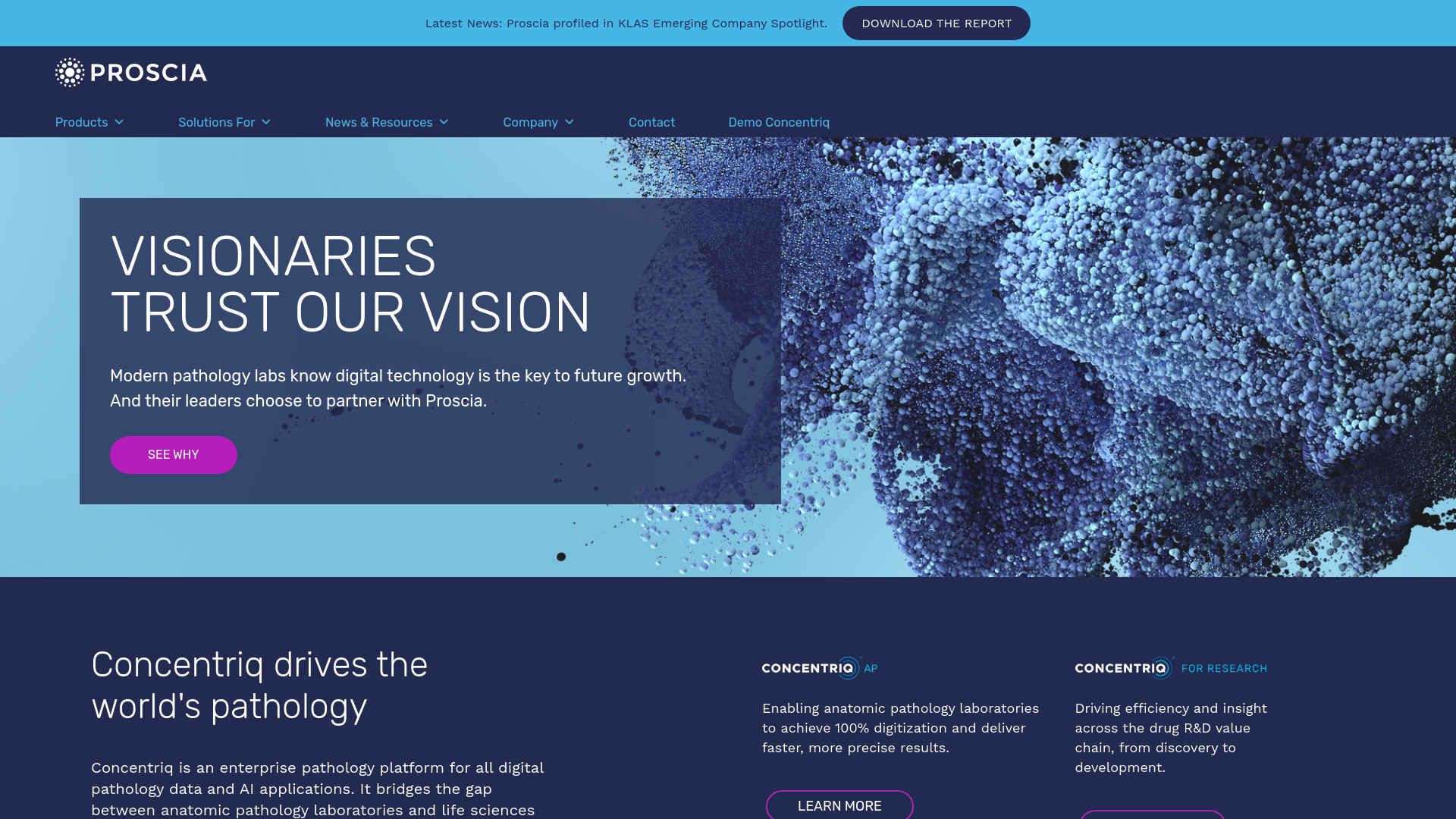
Product Visuals (1 images)
Strengths
- Proscia is a groundbreaking tool in the field of digital pathology, using artificial intelligence to enhance the analysis and utilization of pathology data. It is designed for pathologists, laboratories, and research facilities, aiming to streamline diagnostic processes, improve accuracy, and expedite disease diagnosis. Proscia integrates advanced AI technologies into traditional pathology workflows to enhance patient outcomes.
Limitations
- Technical Requirements: Requires robust hardware and software infrastructure for optimal performance.
- Learning Curve: New users may need time to adjust to the digital interface and features.
- Dependence on Digital Slides: Relies on the availability of high-quality digital slides, which can be a limitation in settings slow to adopt digital pathology.
What You Get
Key Features
- High-Resolution Image Analysis: Uses advanced AI algorithms to analyze high-resolution pathology images with precision and speed.
- Scalable Data Management: Manages large volumes of pathology data efficiently, accommodating various organizational needs.
- Integration with Existing Systems: Seamlessly integrates with laboratory information systems (LIS) to enhance workflow without disrupting existing processes.
- Collaborative Tools: Features that support remote collaboration among pathologists, enabling second opinions and educational opportunities.
- ProsEnhanced Diagnostic Accuracy: Improves the precision of diagnoses through AI-powered image analysis.Time Efficiency: Reduces the time needed for pathology review and diagnosis significantly.Scalability: Suitable for both small labs and large research institutions, adapting to their scale and needs.Remote Collaboration: Facilitates remote consultations and collaboration, improving case management flexibility.ConsTechnical Requirements: Requires robust hardware and software infrastructure for optimal performance.Learning Curve: New users may need time to adjust to the digital interface and features.Dependence on Digital Slides: Relies on the availability of high-quality digital slides, which can be a limitation in settings slow to adopt digital pathology.
Best For
- Hospital Pathology Departments: Enhancing diagnostic accuracy and patient care with AI.
- Research Institutions: Utilizing deep learning tools for advanced pathology research.
- Biotech Companies: Streamlining drug development processes with digital pathology.
- Educational Facilities: Incorporating digital tools into pathology education and training.
- Uncommon Use Cases: Veterinary pathologists for diagnosing animal diseases; forensic departments for analyzing tissue samples in criminal investigations.
Integrations
LIS Compatibility: Integrates with most major Laboratory Information Systems. Cloud-Based Options: Provides cloud storage and analysis, enhancing accessibility and collaboration. API Access: Offers APIs for custom integration into various research and diagnostic workflows. Multi-Platform Support: Compatible with various operating systems for flexibility across different tech environments.
Similar Tools

Weekly Issue
⚡
Research tools · weekly digest
The AI Weekly — free in your inbox
New AI tools, pricing changes, expert picks, and hidden gems — curated by Mr. Spark every week. Join 5,000+ readers who stay ahead of the AI curve.
No spam, ever
Unsubscribe anytime
100% free