
Pricing Details
Contact for Quote: Specific pricing details are tailored according to the scope and requirements of the clinical trial or research project. Disclaimer: Please note that pricing information may not be up to date. For the most accurate and current pricing details, refer to the official Unlearn.AI website.
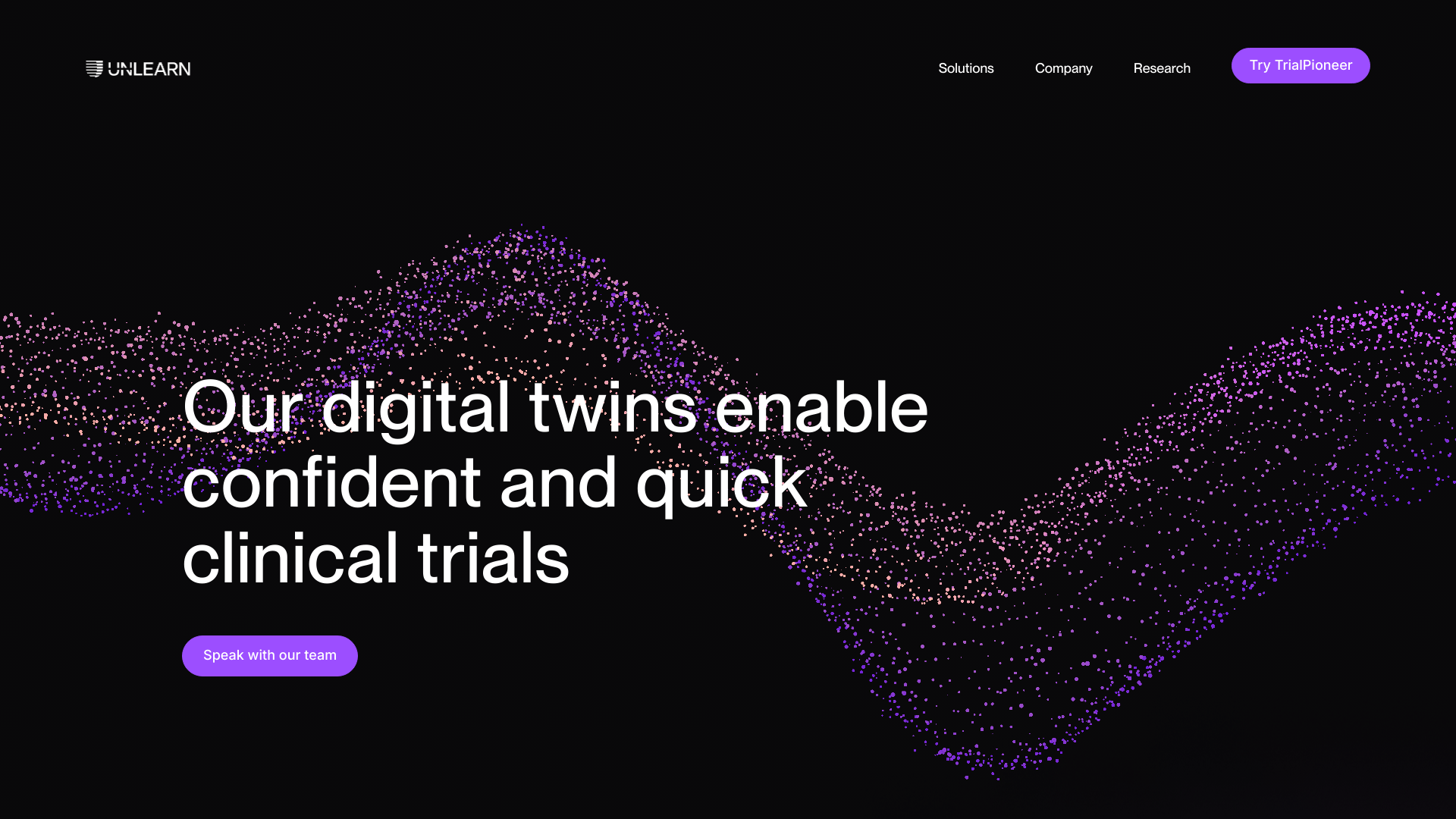
Product Visuals (1 images)
Strengths
- Enhanced Trial Efficiency: Reduces the time required to enroll patients in late-stage studies, significantly speeding up the clinical trial process.
- Increased Accuracy: Improves the ability to observe treatment effects in early-stage clinical trials by enhancing the statistical power without the need for more participants.
- Cost Reduction: By requiring fewer patients and reducing trial duration, significant cost savings are achievable.
- Improved Participant Experience: Offers participants a greater likelihood of receiving experimental treatments due to smaller control groups.
Limitations
- Complex Technology: The advanced nature of the AI and digital twins technology might require a steep learning curve for new users.
- Data Dependency: The effectiveness of digital twins heavily relies on the availability and quality of historical patient data.
- Limited Awareness: As a relatively new concept, digital twins in clinical trials may face initial skepticism or slow adoption from traditional practitioners.
Building your AI toolkit?
Save Unlearn.AI and 1,000+ tools — free with Google, no spam
What You Get
Key Features
- Digital Twins Technology: Utilizes AI to create accurate and comprehensive forecasts of patient health outcomes, revolutionizing the setup and execution of clinical trials.
- TwinRCTs: A novel approach to randomized controlled trials that require fewer patients by using digital twins, thus accelerating the enrollment and efficiency of these studies.
- Regulatory Compliance: Adheres to stringent guidelines from bodies like the US Food and Drug Administration and the European Medicines Agency, ensuring that the trials are not only innovative but also meet high regulatory standards.
- Extensive Disease Coverage: Capable of creating digital twins for a wide array of diseases including Alzheimer’s, Asthma, Diabetes, and many more, making it a versatile tool in various medical research contexts.
- ProsEnhanced Trial Efficiency: Reduces the time required to enroll patients in late-stage studies, significantly speeding up the clinical trial process.Increased Accuracy: Improves the ability to observe treatment effects in early-stage clinical trials by enhancing the statistical power without the need for more participants.Cost Reduction: By requiring fewer patients and reducing trial duration, significant cost savings are achievable.Improved Participant Experience: Offers participants a greater likelihood of receiving experimental treatments due to smaller control groups.ConsComplex Technology: The advanced nature of the AI and digital twins technology might require a steep learning curve for new users.Data Dependency: The effectiveness of digital twins heavily relies on the availability and quality of historical patient data.Limited Awareness: As a relatively new concept, digital twins in clinical trials may face initial skepticism or slow adoption from traditional practitioners.
Best For
- Pharmaceutical Companies: Employing digital twins to streamline drug development and improve the precision of clinical trials.
- Research Institutions: Leveraging the technology for academic research in medicine, particularly in understanding complex disease patterns.
- Healthcare Providers: Using predictive models to better plan treatment regimens for chronic diseases.
- Regulatory Bodies: Utilizing digital twins to set new standards and guidelines for innovative clinical trial designs.
- Uncommon Use Cases: Being explored by health insurance companies to forecast the progression of diseases and manage insurance claims more effectively; used by governmental health departments for public health planning and disease management.
Integrations
Data Integration: Seamlessly integrates with existing clinical databases to utilize historical data effectively. Regulatory Compliance Tools: Ensures that all trials using digital twins align with current medical standards and regulations. Research Platforms: Compatible with major research software used in healthcare and pharmaceutical industries. Custom API Solutions: Offers tailored APIs to fit specific research needs and enhance existing systems.
Similar Tools

Weekly Issue
⚡
Research tools · weekly digest
The AI Weekly — free in your inbox
New AI tools, pricing changes, expert picks, and hidden gems — curated by Mr. Spark every week. Join 5,000+ readers who stay ahead of the AI curve.
No spam, ever
Unsubscribe anytime
100% free